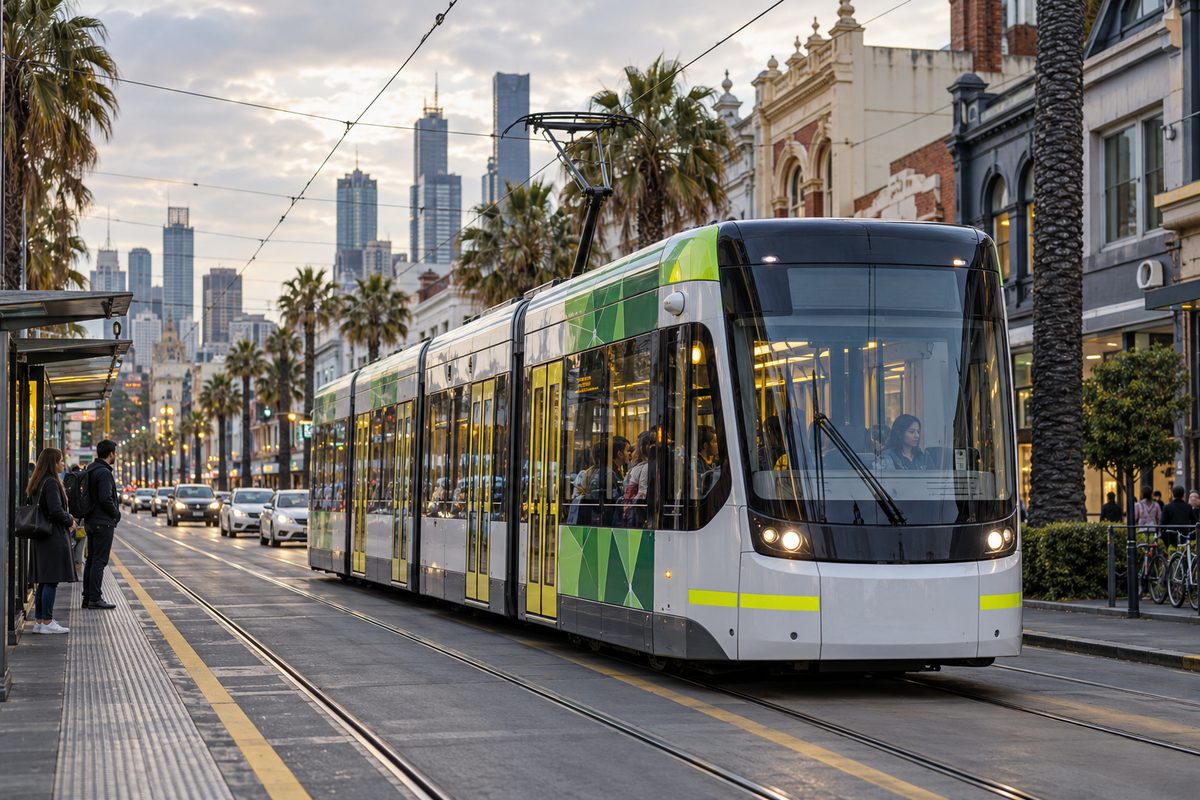
St Kilda Public Transport from Melbourne Cbd
The easiest way to get from the city to St Kilda is a tram, and for most people the best one is route 96 from Bourke Street. It runs often, it mostly stays out of car traffic, and it ends one block from the beach. Two other trams also do the job well. Which one you pick depends on where in the city you start and where in St Kilda you want to get off. This guide from St Kilda Almanac explains how to choose, how to pay and when each option works best.
St Kilda, Victoria sits about 6 km south of the Melbourne central business district. There is no train to St Kilda any more, so trams carry almost everyone who travels between the two by public transport. That one fact shapes every decision below.
Why is the tram your main option and not the train?
St Kilda used to have its own train. The St Kilda railway line ran from Flinders Street out to St Kilda station until 1987. The state then turned the line into light rail for trams. That old rail corridor is now the private track used by route 96.
This is the detail most guides skip. Because route 96 runs on its own track through Albert Park and South Melbourne, it does not sit in car traffic for much of the trip. Trams that share the road can crawl at peak times. Route 96 usually keeps moving.
Trams in Melbourne are run by Yarra Trams under contract to the state. Public Transport Victoria (PTV) handles the timetables, fares and the journey planner. When you need live times or service changes, PTV is the source to check.
Which tram should you catch?
Pick your tram based on where you are starting in the city. Here is how the three main routes compare.
Route 96: the default choice
Melbourne tram route 96 runs along Bourke Street through the city, then down Spencer Street past Southern Cross Station. From there it joins the old rail corridor and heads south to St Kilda. It then runs along Fitzroy Street, Melbourne, and on to The Esplanade and Acland Street, where it ends near the beach.
Catch route 96 if you are:
- Near Bourke Street Mall, the shopping end of the city or Southern Cross Station
- Heading to Acland Street, the beach, Luna Park or the pier
- Travelling with a pram or wheelchair, since the route uses low-floor trams with level stops on much of its length
The trip usually takes around 25 to 30 minutes from the middle of the city. Check the PTV journey planner for current times on the day.
Route 16: the St Kilda Road option
Melbourne tram route 16 runs down Swanston Street and then along St Kilda Road, past the Arts Centre, the Shrine of Remembrance and the gardens. It turns into Fitzroy Street and then follows The Esplanade before heading inland through Balaclava.
Catch route 16 if you are:
- Near Flinders Street Station, Federation Square or Melbourne Central
- Happy with a slower ride that shares the road with cars
- Going to the southern end of the foreshore or on to Balaclava
Several other routes also run down St Kilda Road and branch off near St Kilda Junction. Route 16 is the one that takes you right to the water.
Route 12: the Collins Street option
Route 12 runs along Collins Street, Melbourne, then through South Melbourne via Clarendon Street before reaching Fitzroy Street. It ends at the top end of St Kilda near the old station.
Catch route 12 if you are:
- Working or staying near the Collins Street end of the city
- Going to Fitzroy Street cafes and bars instead of the beach
- Keen to stop at South Melbourne Market on the way
Where should you get off in St Kilda?
Get off at the stop closest to what you came for. St Kilda is spread out, and the wrong stop can mean a 15 minute walk you did not plan for.
- Fitzroy Street: routes 96, 16 and 12 all run along here. Good for restaurants and the top end of the foreshore.
- St Kilda Pier: the routes 96 and 16 stops on The Esplanade are a short walk from St Kilda Pier. The pier is also where people go for the little penguins. Penguin viewing now runs through free ticketed sessions, so book with the official operator before you travel.
- Luna Park, Melbourne: stay on route 96 to the Acland Street end. Luna Park's famous face gate is right by the terminus.
- Acland Street: route 96 ends here. This is the strip known for its cake shops.
If you plan to take children to the St Kilda Adventure Playground, note that it was temporarily closed for upgrades when we checked on 23 October 2026. Confirm its status with Port Phillip council before you go.
For more ideas on what to do once you arrive, see the St Kilda Almanac home page.
How do you pay for the trip?
You need a valid ticket once your tram leaves the Free Tram Zone. This catches out a lot of visitors.
The Free Tram Zone covers the central city. You can ride free inside it, so jumping on route 96 on Bourke Street costs nothing at first. But St Kilda is well outside the zone. If you do not touch on, you are riding without a ticket once the tram passes the zone edge. Ticket inspectors check routes to St Kilda often, especially on busy weekends.
Here is what to do:
- Get a myki card or set up a mobile myki on a compatible phone. Cards are sold at many stations, convenience stores and some machines.
- Add money (myki Money) to the card.
- Touch on when you board, even if you board inside the Free Tram Zone. Most trams have readers by each door.
A standard Zone 1 fare covers two hours of travel, so a return trip inside that window can cost a single fare. There is also a daily cap, so you will not pay more than the daily amount no matter how many trips you take. Fares change each year, so check the current rates on the PTV website.
Victoria has been rolling out new ticketing options, including tapping a bank card or phone. Check PTV for what is accepted on trams before you rely on it.
When is the trip smooth and when is it slow?
Most of the time, trams to St Kilda run every few minutes during the day. The trip gets harder at a few predictable times.
Weekday peak hours
Route 16 and route 12 share road space, so they slow down in the morning and evening rush. Route 96 handles peak hour better thanks to its private track, but it gets very full. Stand back from the doors and let people off first.
Hot days and summer weekends
When the weather is warm, half the city seems to head to the beach at once. Route 96 can be packed from Bourke Street onward. A simple fix: board at a stop near the start of the city section, such as near Spring Street, so you get on before the crowd. Or take route 16 instead, since it tends to be a little less crowded on beach days.
Big events
The St Kilda Festival, football at Marvel Stadium and concerts can all change how trams run. Yarra Trams sometimes adds extra services or changes routes for these days. Look at the PTV service changes page the day before.
Late nights
Trams run late, and on Friday and Saturday nights some routes run all night as part of the Night Network. Check which routes are included, since this changes from time to time. If you are heading back from St Kilda late on a weeknight, check the last tram time before you leave dinner.
What do people get wrong about this trip?
The biggest mistake is assuming all trams labelled "St Kilda" go to the same place. They do not. Some routes run down St Kilda Road and then turn off towards St Kilda East or Brighton Road. You can end up a long walk from the beach. Look at the route number on the front of the tram, not just the destination sign.
Here is a hypothetical example. A visitor staying near Flinders Street sees a tram marked for St Kilda Road and gets on. It turns off at St Kilda Junction and heads away from the water. They then walk 20 minutes back to Fitzroy Street. Catching route 16 or walking two blocks to Bourke Street for route 96 would have avoided that.
The second mistake is not touching on in the Free Tram Zone. People think they can touch on later. Then they forget, or the tram is too crowded to reach a reader. Touch on as soon as you board.
The third mistake is taking a car or rideshare to save time. Parking near the foreshore is limited and costly on busy days, and road traffic on St Kilda Road can be slow. On most days, route 96 beats the drive.
Can you combine the tram with walking or cycling?
Yes, and it can make the day better. Route 12 passes close to South Melbourne Market, so you can stop there for food and catch the next tram on. Route 96 passes Albert Park Lake, which is a short walk from the stops along the light rail section.
You can also take a tram one way and walk or ride back along the bay. Bikes are not allowed on Melbourne trams, so if you want to cycle, ride the whole way or hire a share bike or scooter where available. Our foreshore cycling guide on the St Kilda Almanac site covers the route along the water.
Your plan for the trip
If you remember one thing, make it this: head to Bourke Street, catch route 96 and touch on your myki straight away.
Before you go:
- Check live times and any service changes on the PTV app or website
- Top up your myki or set up mobile myki so you can touch on at once
- Choose your stop based on where you are going: Fitzroy Street, the pier or Acland Street
- On a hot weekend, board early in the route or switch to route 16
- If you plan to see the penguins, book a free session with the official operator first