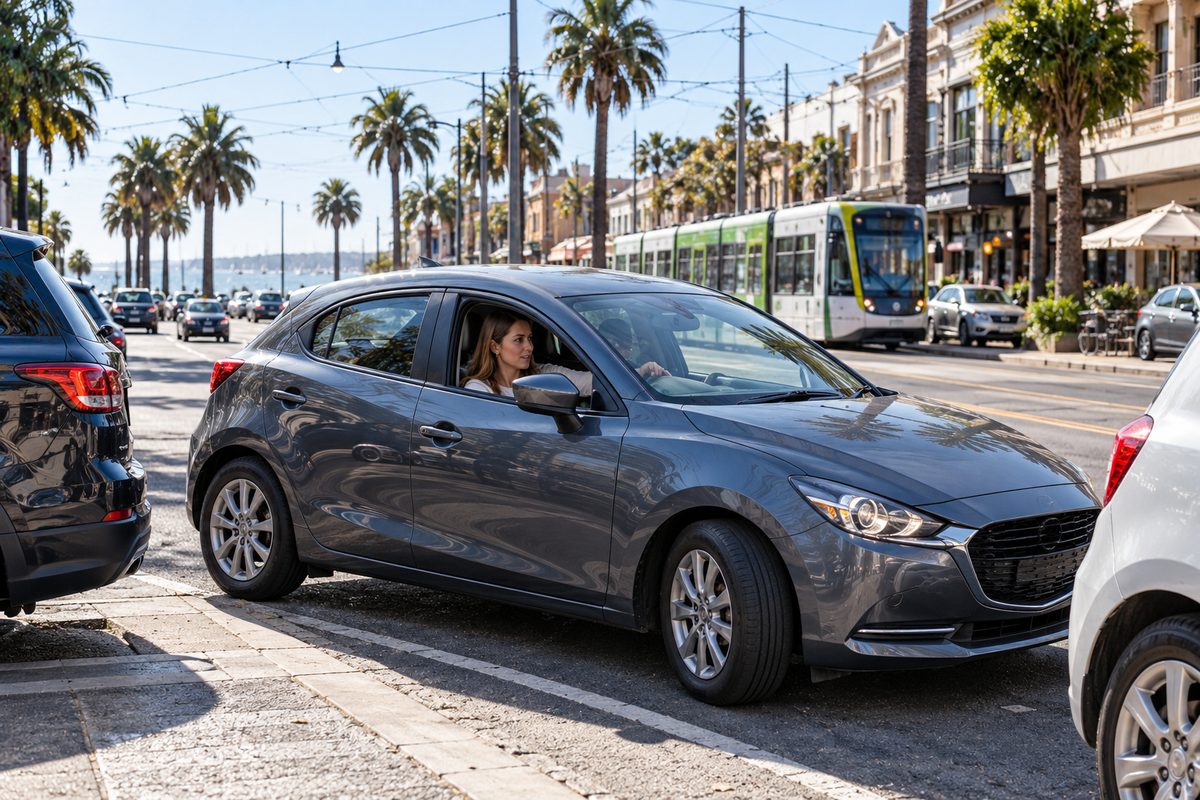
St Kilda Parking Visitor Guide
The best way to park in St Kilda is to choose your parking before you arrive, pay for the full time you need, and read every sign on the pole before you walk away. St Kilda, Victoria has plenty of parking, but most of it near the beach and the main streets is paid, time-limited or reserved for residents. Visitors who get fined usually did not lack a space. They missed a rule printed on a sign.
This guide from St Kilda Almanac covers how the system works, which areas suit which kinds of visit, and when leaving the car at home is the smarter call. Rules, fees and hours change, so check the current signs on the street and the City of Port Phillip website before you go. For more on things to do once you arrive, see the St Kilda Almanac home page.
Who sets the parking rules in St Kilda?
The City of Port Phillip sets and enforces most street parking rules in St Kilda. The council manages paid parking, time limits, resident permit areas and its own off-street car parks across the Port Phillip area, which also takes in suburbs such as South Melbourne, Elwood and Port Melbourne.
That matters for one simple reason. The sign on the pole is the rule. A council website or a map app can tell you roughly what to expect, but the sign beside your car is what an officer will check. If the sign says two hours, 8am to 8pm, that is the limit, even if the next street over allows four.
Some main roads have extra rules on top of council ones, such as clearways during peak hours. Cars parked in a clearway can be towed, which costs far more than a normal fine. These are marked with signs, so the same habit applies: read the whole pole, top to bottom.
How does paid parking work on the street?
Most paid bays in central St Kilda work on a pay-before-you-leave basis with a time limit. You pay for the time you expect to stay, up to the maximum shown on the sign. When your time runs out, you need to move, not simply pay again, if the bay has reached its limit.
Paying at a ticket machine
Many streets still have a ticket machine near the bays. Check the machine for its zone or bay details, the hours it applies and the payment types it takes. Some bays need you to display a ticket, while others link payment to your number plate or bay number. The machine itself will say which. If a machine is out of order, do not assume parking is free. Check the sign and the council's guidance, and look for another machine or an app option.
Paying by app
The council also supports paying by phone in many paid areas. The app lets you start a session, top up within the allowed limit and get a reminder before time runs out. That reminder is the real benefit. A hypothetical example: a family parks near the beach, pays for two hours, then decides to stay for lunch. With an app they can see the time left from the cafe table instead of guessing. Check the current app the council uses on its website, since providers can change.
Free does not mean unlimited
Some streets have no fee but still carry a time limit, such as 1P or 2P. Officers enforce these just as they enforce paid bays. Outside the hours shown on the sign, the limit usually does not apply, but only if the sign says so.
Where should you park for each kind of visit?
Pick your parking based on where you will spend most of your time. St Kilda is compact, but walking from the wrong end with beach bags and children feels a lot longer than it looks on a map.
Beach, pier and foreshore
The foreshore has several council parking lot areas and on-street bays along the beachfront roads. These fill early on warm days, often well before lunch. They suit a beach day or a pier walk because you stay close to the sand. If you plan to watch the penguins at the pier in the evening, check the official operator for the current free ticketed sessions first, then plan parking around that time, since evening demand can be high in warmer months.
Luna Park and the Esplanade
Luna Park, Melbourne sits on the Lower Esplanade at the southern end of the main beach strip. Parking right outside is limited and busy when the park is open. A practical approach is to park a few streets back, where limits may be longer, and walk a short distance. Check Luna Park's own website for opening days before you drive, since it does not open every day of the year.
Acland Street
Acland Street is the shopping and cake shop strip, and much of its central section is set up for people walking and trams rather than cars. Parking is mostly in side streets, with short time limits close to the shops. If you plan a quick coffee, a short-stay bay works. For a longer visit, look further out from the strip, but watch for resident permit zones as you go.
Fitzroy Street
Fitzroy Street, Melbourne runs from St Kilda Road down toward the beach and is lined with restaurants and bars. It has on-street bays with time limits, and parts of it may have clearway rules at certain hours. It is a common evening dining spot, so check whether evening hours on the sign still require payment. Visitors sometimes confuse Fitzroy Street with Fitzroy, Victoria, a separate inner-north suburb across the city. If a map app suggests a long drive north, you have probably typed the wrong Fitzroy.
What changes on busy days?
On big days, parking near the beach becomes close to impossible, and the tram becomes the better choice.
The St Kilda Festival is the clearest example. It is usually held in summer and draws very large crowds to the foreshore and nearby streets. Roads close, temporary parking rules appear and trams run fuller than usual. The council publishes transport and road closure details before each festival, and that page is worth checking a week out. Temporary signs placed for events override the usual rules for that period.
Hot weekends in summer work in a similar way on a smaller scale. A hypothetical example: a visitor arrives at 1pm on a 35 degree Saturday expecting to park near the beach. Every foreshore bay is taken, side streets are full and the nearest free space is a long walk away. The same trip at 9am, or on a weekday, is far easier.
Major events elsewhere on St Kilda Road and in nearby parklands can also add traffic. If your visit overlaps with a large event, give yourself extra time or switch to public transport.
Is the tram easier than driving?
For most visitors coming from the city, yes. Trams in Melbourne reach St Kilda often and drop you near the main areas, which removes the parking question completely.
Yarra Trams runs the network. Several routes serve St Kilda, including routes that travel along St Kilda Road and down Fitzroy Street, and route 96, which runs to the Acland Street area along a dedicated light rail corridor for much of its trip. From the city centre, trams cross the Yarra River and head south along St Kilda Road, so the trip is simple even for first-time visitors. Check the Public Transport Victoria journey planner for current routes and any works, since routes and stops can change.
A few points help here:
- You need a valid myki or approved payment option for trams in St Kilda. The free tram zone in the city centre does not reach this far south.
- Trams are busy on festival days and hot weekends, but they keep moving while car traffic stalls.
- If you drive in from further out, parking near a train station or tram stop outside the busy area and riding the last stretch can save time and stress.
A note for people researching online: searching terms like park-and-ride or light rail parking sometimes brings up results for the Utah Transit Authority in the United States. Those rules have no connection to Melbourne. Stick to Public Transport Victoria and Yarra Trams for local information.
What mistakes catch visitors out most?
The most common mistake is parking in a resident permit zone. Many residential streets in St Kilda carry signs that let permit holders park for longer while everyone else is limited, or excluded entirely. These streets look like free parking to a visitor. They are not.
Other mistakes that lead to fines:
- Reading only the top sign. A pole can hold several plates with different rules for different hours or days. Read all of them.
- Overstaying the limit after topping up. Paying again does not extend the maximum time allowed in that bay.
- Parking in loading zones. These are common near shops and restaurants and are for commercial vehicles during the hours shown.
- Ignoring clearway times. A space that is fine at 11am can become a tow zone in the afternoon peak.
- Blocking driveways or parking too close to corners. Road rules apply even where there is no sign.
- Forgetting event signs. Temporary signs for the St Kilda Festival and other events can change rules for days at a time.
If you hold an Accessible Parking Permit, the rules for using disabled bays and extra time in standard bays are set out on the permit and on council signs. Check both before you rely on extra time, since conditions can vary by location.
If you get a fine and believe it was issued in error, the council has a formal review process. Take photos of the signs and your car before you leave as a habit. Those photos are the strongest evidence you can have.
How should you plan your visit?
A few minutes of planning before you leave home saves most of the hassle. Here is what to do:
- Decide where you will spend most of your time. Beach and pier, Luna Park, Acland Street or Fitzroy Street each point to a different parking area.
- Check the date. Look up whether the St Kilda Festival or another large event is on. If it is, plan to take the tram.
- Check opening times and bookings. Confirm hours for Luna Park and penguin viewing sessions with the official operators. If you plan to visit the St Kilda Adventure Playground, it was temporarily closed for upgrades when this guide was checked, so confirm its current status with the council first.
- Arrive early on warm weekends. Aim for the morning if you want a foreshore bay.
- Set up payment before you go. Download the council's current parking app or carry a card that works at the ticket machine.
- Read the whole sign, then photograph it. Note the limit, the hours and any permit or clearway rules.
- Set a reminder. Use the app alert or a phone timer for ten minutes before your time ends.
If you only do one thing, make it this: before you lock the car, read every plate on the nearest sign pole and set a timer for when you must move.