St Kilda Penguin Viewing Bookings
To see the penguins at St Kilda, book a free ticketed viewing session through the official operator before you travel, because walk-up access to the colony area is limited and sessions fill fast. The tickets cost nothing. They exist to cap crowd numbers so the birds can come ashore without stress. Times shift through the year with sunset, so the session you booked for a summer evening will not match a winter one. Check the operator's page on the day as well, since works on the pier or bad weather can change access at short notice.
This guide from St Kilda Almanac explains how the booking system works, why it exists, and how to plan a night that actually ends with penguins in front of you. For more on the suburb, start at the St Kilda Almanac home page.
Why do you need a ticket to watch wild birds?
You need a ticket because the colony lives on a narrow rock breakwater beside a busy city pier, and too many people in one spot harms the birds. The booking system is a crowd control tool. It is not a tourist attraction with a gate fee.
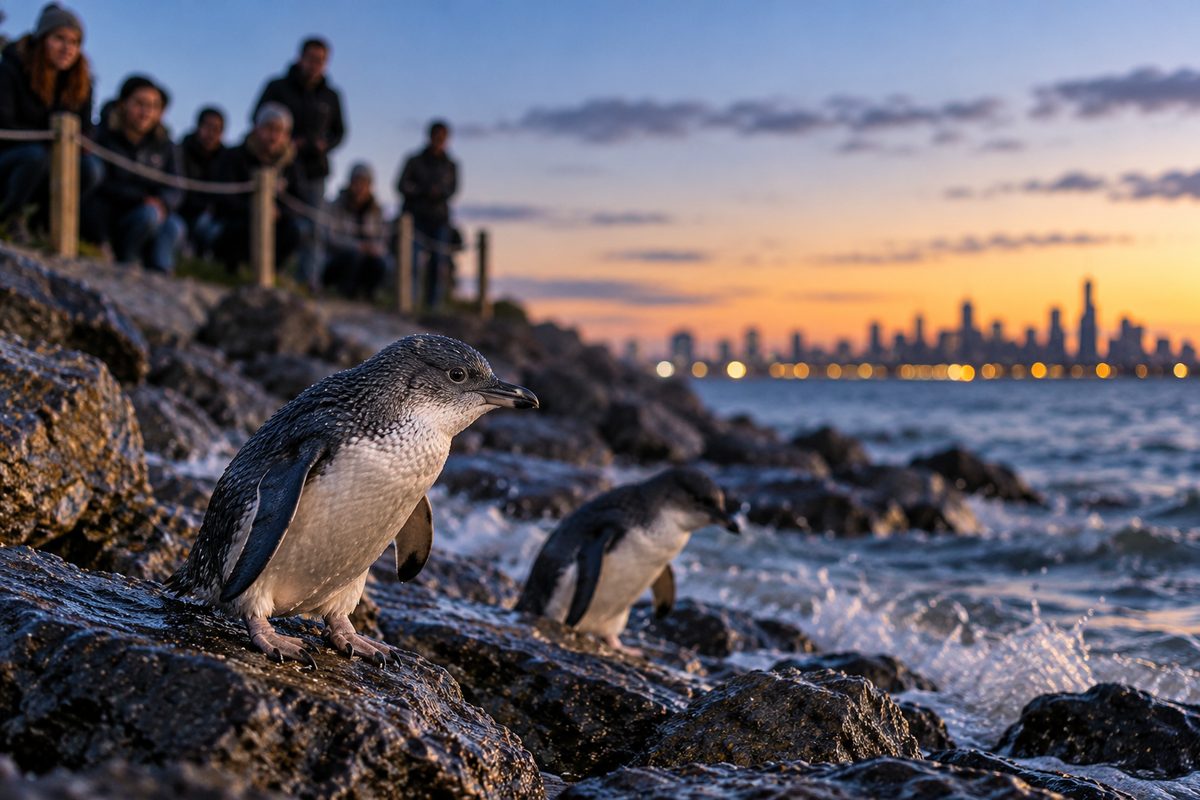
The colony sits at the end of St Kilda Pier in St Kilda, Victoria, about 6 km from the Melbourne CBD. The birds nest in gaps between the rocks of the breakwater. Each evening after dark, adults swim back from feeding in Port Phillip Bay, Melbourne and climb up into those rocks.
Before ticketing, people could crowd the boardwalk freely. On warm summer nights that meant hundreds of visitors, phone torches, and people leaning over rails to get close. A penguin that feels threatened will wait in the water rather than cross to its burrow. If it has a chick waiting, that chick goes hungry for longer.
Free tickets fix this. A set number of people per session means space on the viewing area, a guide who can manage behaviour, and calmer birds. The result for visitors is better too. You see more penguins when fewer people are pushing for the same rail.
Who runs the viewing sessions?
The pier and breakwater sit under the management of Parks Victoria, the state agency responsible for many parks and waterways around Port Phillip. Volunteer guides from Earthcare St Kilda have run penguin education at the site for years. The group also monitors the colony and has recorded data on the birds since the 1980s.
Arrangements around the pier have changed during the long St Kilda Pier redevelopment, so the best move is simple. Go to the official operator's website listed by Parks Victoria for St Kilda penguin viewing, and book there. Avoid third party sites that charge a fee. Any site asking you to pay for a standard viewing session is not the official free system.
Earthcare St Kilda volunteers are often on the boardwalk during sessions. They can tell you how many birds are nesting, which burrows are active, and what the penguins are doing at that time of year. Ask them questions. That is a big part of what the session offers.
When should you book, and what time are sessions?
Book as early as the system allows for summer weekends and school holidays. For a weeknight in winter, a few days ahead is often enough. Sessions start around sunset because penguins only return once it is dark enough to hide them from predators like gulls.
That means session times move by more than two hours across the year. Melbourne sunset falls after 8:30 pm in mid summer and before 5:15 pm in mid winter. If you book in December and visit friends again in June, do not assume the same time.
Here is a hypothetical example to show how timing goes wrong. A family books a summer session but plans dinner on Acland Street first. Dinner runs long. They reach the pier fifteen minutes late, and the entry window has closed. The fix is to eat after the penguins, not before. Most of the cafes and restaurants near the foreshore stay open well into the evening. Our guide to St Kilda waterfront dining covers options near the pier.
What if the weather turns?
Penguins come ashore in rain and wind. You might not want to. The breakwater is exposed to the bay, and a southerly change can drop the temperature fast. Sessions can be cancelled for severe weather or safety reasons, so check for updates on the day. If you cannot attend, cancel your booking so someone else can use the spot. Free tickets are often wasted by no-shows, which keeps others off the waitlist.
What are the rules on the night?
The rules all protect the birds' eyes and nerves. Follow them and you will see far more.
- No flash photography. Penguins have eyes adapted to low light, and a flash in the dark disturbs them.
- No white torches or phone lights. Guides use dim red light, which penguins cope with better. Switch your phone to silent and keep the screen dim.
- Stay on the boardwalk. Never climb onto the rocks or reach toward a bird.
- Keep your voice low. Loud groups slow down arrivals.
- No food or feeding. Penguins eat small fish they catch themselves.
Photography without flash is fine, but phone cameras struggle in this light. Many visitors give up and just watch. That is usually the better choice. A blurry photo is a poor trade for missing a pair greeting each other at the burrow.
How does St Kilda compare to the Phillip Island Penguin Parade?
St Kilda is free, close to the city, and intimate. The Phillip Island Penguin Parade is a paid, large scale experience with grandstand seating and thousands of birds. They suit different trips, and most people get confused because they assume they are the same thing.
Phillip Island sits roughly 140 km south east of Melbourne, about a two hour drive. Its parade is run by Phillip Island Nature Parks. There, penguins cross a beach in large groups while visitors watch from stands set back from the sand. Tickets cost money, and there are tiered viewing options.
St Kilda gives you a different kind of night:
- Travel: a short tram ride from the CBD instead of a full day trip.
- Cost: free tickets instead of paid entry.
- Distance to birds: often a metre or two instead of across a beach.
- Numbers: fewer penguins per night, but you watch individuals up close.
A common mistake is treating St Kilda as a cheap stand-in for Phillip Island. It is not a smaller copy. It is an urban colony living on a man-made breakwater, with the city skyline behind it. That setting is the whole point. For visitors short on time, it is the easier choice. For anyone wanting a big parade of birds across sand, Phillip Island is the one to book.
How do you get to St Kilda Pier for your session?
Public transport is the easiest option. Several tram routes run from the CBD to St Kilda, including the 16 and the 96, and stops near the foreshore leave a short walk to the pier entrance on Pier Road. Allow time for the walk along the pier itself, which takes a few minutes.
Driving works, but parking near the foreshore is metered and busy on summer evenings. Cycling is a good choice, with bike paths running along the bay from Port Melbourne and Elwood.
Arrive 15 to 20 minutes before your session. You will need to find your meeting point, show your booking, and settle in before the light fades.
What should you bring?
- A warm layer, even in summer. The wind off the bay is cold after dark.
- Your booking confirmation on your phone, with the screen set to low brightness.
- Comfortable shoes for standing for a while on the boardwalk.
What do most visitors get wrong?
Most people expect a show with a start and finish. Penguins keep no schedule. They arrive when they are ready, and the first birds can take a while. Visitors who leave after ten quiet minutes often miss the main arrivals.
Another mistake is ignoring what the booking protects. Wildlife tourism works well when the animals stay healthy, and poorly when crowds push them away. The St Kilda colony survived the building of the breakwater, a growing city, and decades of rising visitor numbers. Ticketed sessions are part of how it keeps going. Treat the booking as your share of that deal.
A third mistake is going only once. The colony looks different across seasons. A spring visit full of courtship calls feels nothing like a late summer night with fluffy chicks peering out of the rocks. Locals in Port Phillip often go back more than once for that reason.
How can you help the colony beyond your visit?
The colony relies on a clean bay. Litter on the beach washes into the water, and fishing line tangles birds. Picking up rubbish on your way along the foreshore helps directly.
Earthcare St Kilda accepts volunteers and supports research on the birds. If you live nearby, joining their work is a practical way to learn more and give back. Keep dogs on a lead near the pier, as dogs are a known threat to penguins along the Victorian coast.
Your next step
Open the official Parks Victoria listing for St Kilda penguin viewing and book a free session for the night you want, then plan everything else around that time.
- Pick your date and check sunset for that day.
- Book through the official operator only, never a paid reseller.
- Plan your tram or parking to arrive 15 to 20 minutes early.
- Pack a warm layer and set your phone to silent with a dim screen.
- Check for updates on the day, and cancel if you cannot make it.
- Book dinner for after the session, not before.
Booking a St Kilda penguin viewing lets visitors watch the Little penguin colony come back to the St Kilda breakwater at dusk. You can book a guided tour, or plan your visit around the volunteer guides who are often stationed along the pier. Either way you'll learn how the birds behave and how to watch them without disturbing them. Keep your distance, stay on the boardwalk and never use flash photography, because these steps protect the Little penguin as it comes ashore and returns to its nesting spots among the rocks.