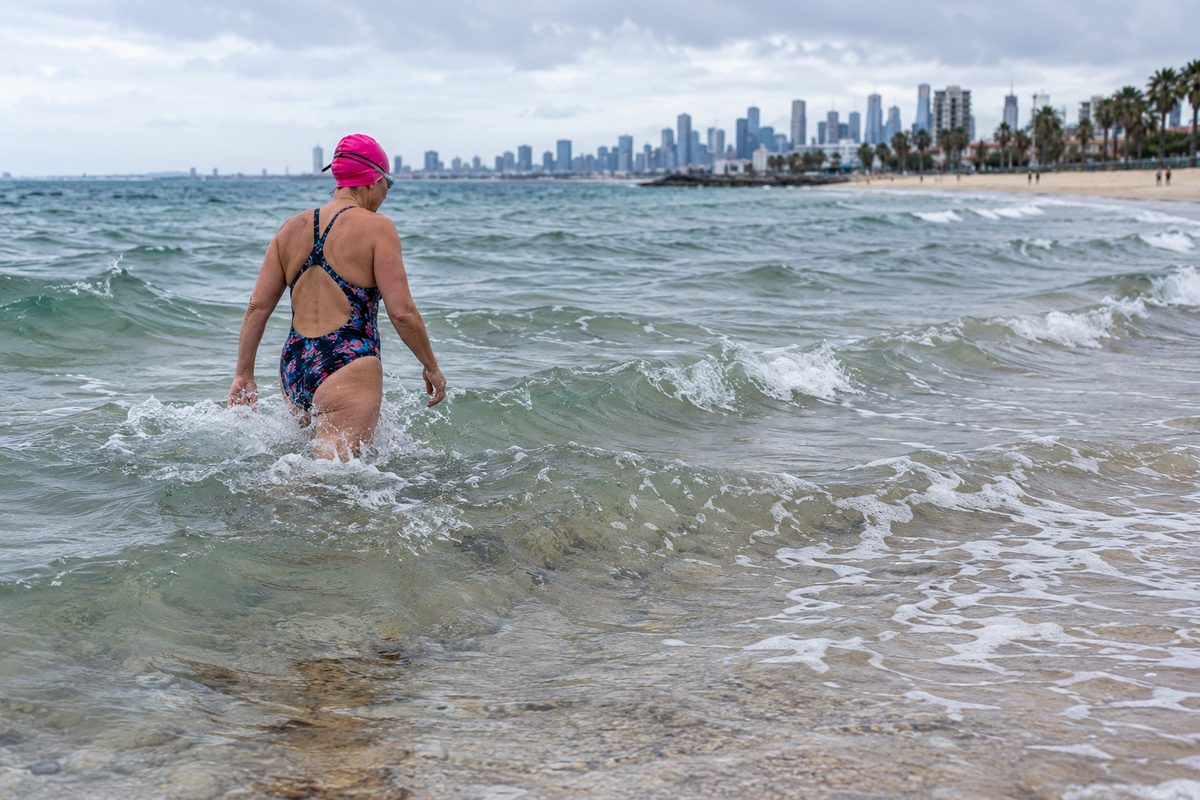
St Kilda Beach Swimming Conditions
St Kilda beach is usually calm and safe for swimming, but the water can turn poor for a day or two after heavy rain, and strong southerly winds can make it choppy. Most days, the sea here is flat, shallow and gentle. The two things that change it are rain and wind. If you learn to read those two things, you can pick a good swim day almost every time.
This guide from St Kilda Almanac explains what drives the conditions, how to check them before you leave home, and where to swim once you arrive. For more local guides, visit the St Kilda Almanac home page.
Why is the water at St Kilda so calm most of the time?
St Kilda sits inside Port Phillip, a large bay that is almost closed off from the ocean. The entrance at the Heads is narrow. Big ocean swells lose most of their power before they reach the northern shore. That is why you will rarely see surf at St Kilda, Victoria.
The waves you do see are mostly a wind wave. That means the wind makes them as it blows across the bay. They are short, close together and small. On a still morning, the water can look like glass.
The beach also slopes gently. You can walk out a fair way and still stand. This makes it popular with families and with people who want an easy swim rather than a fight with the surf.
What about tides?
Tides in this part of the bay are small, often well under a metre. You will notice the intertidal zone, the strip of sand between high and low water, but it is narrow. At low tide you may find a few sandbars and shallow pools. At high tide the beach gets a little thinner. The tide rarely decides whether a swim is good or bad here. Wind and rain matter far more.
How do wind and the sea breeze affect a swim?
Wind direction decides how rough the water gets at St Kilda. The beach faces roughly west and south-west across the bay. That has a clear effect.
- Northerly or easterly winds blow from the land out to sea. The water near the shore stays flat. These are often the calmest swim days, though hot northerlies can bring very warm air.
- South-westerly or southerly winds blow across a long stretch of open bay before they reach St Kilda. They build choppy waves that break on the sand. The water gets stirred up and cloudy.
On many summer days, a sea breeze kicks in during the afternoon. The land heats up faster than the water, and cooler air from the bay rushes in to replace the rising warm air. At St Kilda, the sea breeze often comes from the south or south-west. A glassy morning can turn into a choppy afternoon within an hour or two.
Many people miss this. They plan a swim for 3 pm because it is the hottest part of the day. By then, the sea breeze may have arrived. If you want flat water, go in the morning.
How strong is too strong?
There is no single cut-off, but a useful guide for casual swimmers goes like this. Light winds under about 15 km/h usually mean pleasant water. Once the wind passes about 25 km/h from the south or south-west, the chop gets uncomfortable for weaker swimmers, and kitesurfers often start to appear. If you see kites in the air off St Kilda or Elwood, that is a strong sign the water is rough for swimming.
Check the Bureau of Meteorology forecast for both wind speed and wind direction before you go. Direction matters as much as speed.
When is the beach patrolled, and what do the flags mean?
The St Kilda Life Saving Club runs volunteer patrols at St Kilda beach during the summer season. Patrols usually run on weekends and public holidays. Life Saving Victoria sets the season and supports local clubs. Times can change, so check the club or Life Saving Victoria for current patrol days and hours.
When the beach is patrolled, lifesavers set up red and yellow flags. Swim between them. That is the area the patrol is watching most closely, and where they have judged the water to be safest that day.
Other flags you may see:
- Red flag: the beach is closed. Do not swim.
- Yellow flag: take care. Conditions may be hazardous.
- Red and white quartered flag: evacuate the water now.
- Black and white quartered flag: a zone for surfcraft such as boards. Swimmers should stay out of it.
Why do some flags at St Kilda have nothing to do with swimming?
St Kilda has a busy sailing scene. Yacht clubs near the foreshore and around St Kilda Pier run races on the bay, often on weekends. During those events you may see racing flags flown from club buildings, boats and committee vessels. These are signals for sailors about starts, course changes and finishes.
Racing flags do not tell you anything about swim safety. Visitors sometimes see a bright flag on a mast and assume it is a beach warning. Only trust the flags set up on the sand by lifesavers. If you are unsure, walk up to the patrol tent and ask.
Where along the beach should you swim?
Swim in the middle of the beach, away from structures and drain outlets, and between the flags when they are up.
A few spots are worth avoiding:
- Near stormwater drain outlets. These carry runoff straight onto the sand. Water quality is worst right in front of them, especially after rain.
- Around St Kilda Pier and the marina. Boats, ferries and fishing lines make this area unsafe for swimmers. Do not jump or dive from the pier.
- Close to boat ramps and launching areas. Small craft come and go without much warning.
The beach south of the pier, along the main foreshore, is where most people swim. If St Kilda is crowded or the wind is up, some swimmers head a short way south to Elwood. Elwood faces a slightly different angle and can feel a little more sheltered on certain winds, but it is also affected by Elster Creek and stormwater after rain. Check its own Beach Report rating rather than assuming it is cleaner.
How cold is the water, and when is it best?
The bay is cool for much of the year. In winter the water often sits around 12 to 14°C. By late summer it usually warms to around 19 to 22°C. The warmest water tends to arrive in February and March, not December. The bay takes months to heat up after winter.
That surprises many visitors. A hot day in early December can still mean chilly water. If you want the most comfortable swim, aim for late summer, a calm morning, and a dry spell of a few days.
Plenty of locals swim all year round. If you join them in cooler months, keep the swim short, stay close to shore and never swim alone.
What else in the water should you know about?
St Kilda is home to a colony of little penguin birds that live in the rocks of the breakwater near the pier. They feed in the bay and return to shore around dusk. They are wild animals and very sensitive to disturbance. Give the breakwater a wide berth when swimming or paddling, and never try to approach them from the water.
If you want to see the penguins, viewing on the pier uses free ticketed sessions. Book through the official operator and check current details before you go. Do not try to get closer from the beach or the rocks.
You may also meet jellyfish in the bay at times, mostly in warmer months. Most species here give a mild sting at worst. If you are stung, leave the water and ask a lifesaver for help if the beach is patrolled.
Litter washes in after storms too. That is another sign that runoff has reached the shore, and a good reason to wait a day or two.
How do you put it all together on the day?
Picture a hypothetical Sunday in February. It has been dry since Wednesday. The Beach Report shows good water quality for St Kilda. The forecast says light north-easterly winds in the morning, with a southerly sea breeze around 2 pm. The St Kilda Life Saving Club is on patrol.
That is close to a perfect setup. Arrive around 9 or 10 am. Swim between the flags. Expect flat, warm water. Be out by early afternoon before the breeze builds the chop.
Now change one detail. Say there was a thunderstorm on Saturday night. Everything else is the same. The answer flips. The water quality is likely poor, even with sunshine and calm seas. Skip the swim, or enjoy the beach on dry land and come back later in the week.
Rain decides whether the water is clean. Wind decides whether it is comfortable. Check both, and you will rarely get it wrong.
Your swim-day checklist
Check rainfall for the past two days before you go. If it rained heavily, wait at least 24 to 48 hours.
- Look up the EPA Beach Report during summer for St Kilda's daily water quality rating.
- Check the wind forecast for speed and direction. Light winds from the north or east mean flatter water.
- Plan to swim in the morning on hot days, before the afternoon sea breeze arrives.
- Confirm patrol times with the St Kilda Life Saving Club or Life Saving Victoria, and swim between the red and yellow flags.
- Pick your spot with care. Stay away from drains, the pier and the penguin breakwater.
If you do only one thing, make it this: before every swim, ask yourself whether it rained hard in the last two days. If the answer is yes, wait.
Water quality at St Kilda Beach can change quickly after heavy rain. Surface runoff from nearby streets and stormwater drains carries litter, sediment and bacteria into Port Phillip Bay. The Yarra River flows into the northern end of the bay and can also affect water clarity along this stretch of coast after wet weather. Neighbouring beaches such as Elwood, Victoria are affected by the same conditions. Swimmers should check current water quality advice before going in, and it's usually best to stay out of the water for a day or two after significant rainfall.