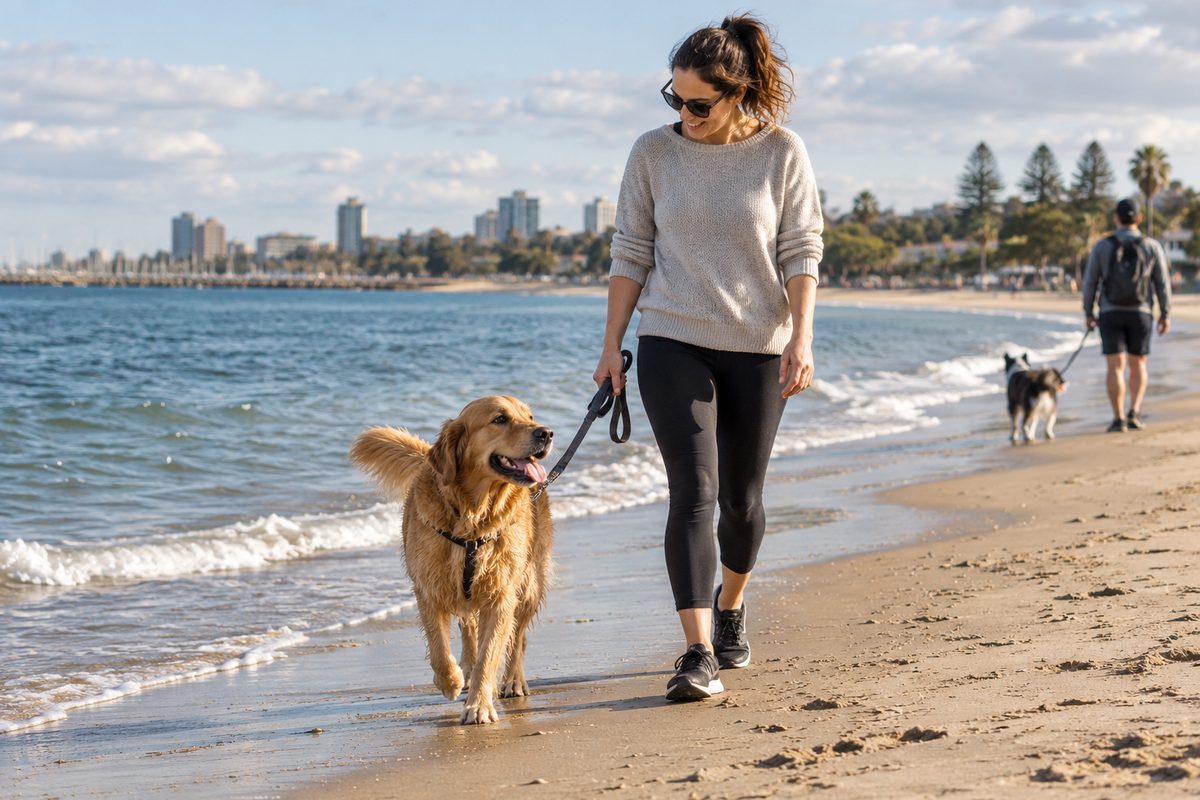
St Kilda Dog Friendly Beach Rules
Dogs can use the beach at St Kilda, but the rules change with the season and the time of day, and dogs are kept away from the penguin areas at all times. The City of Port Phillip sets the beach rules, and they follow a simple pattern. In the cooler months, dogs get much more freedom on the sand. In the warmer months, when the beach is packed, dogs are kept off the sand for the busiest part of the day. The breakwater and penguin zone are off limits all year.
Most people who get caught out are not breaking the rules on purpose. They walk down at a time that was fine last month, or they follow the foreshore path onto a part of the coast where different rules apply. This guide explains how the system works so you can plan a walk that keeps you, your dog and the local wildlife out of trouble. For more on the area, start at the St Kilda Almanac home page.
Who actually makes the rules on the sand?
The City of Port Phillip makes the dog rules for the beaches in St Kilda, Victoria. Its rules come from the council's Domestic Animals Management Plan and its local orders under the Victorian Domestic Animals Act. That means the same core rules cover St Kilda, Elwood, Middle Park, Albert Park and Port Melbourne beaches.
This matters because it gives you one source of truth. Signs at beach entries show the local version of the rule. If a sign and something you read online disagree, follow the sign and check the council website. Councils review these orders from time to time, and the sign is what an officer will point to.
Some places near the water are not run by council alone. St Kilda Pier and the breakwater are managed with state agencies, and the penguin viewing program has its own official operator. Rules there sit on top of the council rules, and they are stricter.
Why do the hours change during the year?
The hours change because summer crowds and dogs do not mix well on a narrow beach. Port Phillip ties its beach rules to Daylight saving time, which in Victoria runs from the first Sunday in October to the first Sunday in April.
Here is how the pattern works:
- During Daylight saving time: dogs are kept off the beach during the middle of the day. Council's long-running hours have been roughly 10am to 7.30pm, with dogs allowed on the sand early in the morning and in the evening. Check the sign at your entry point for the exact times.
- Outside Daylight saving time: from April to early October, dogs have much wider access to the beach, with off-leash use allowed in many beach areas as long as the dog is under effective control.
The easy mistake is the changeover. A hypothetical example: a dog owner walks at 11am every Saturday through September with no problem. The clocks go forward in October. The next Saturday, the same walk at the same time now breaks the rule. Nothing about the beach looks different, but the season has flipped.
A good habit is to treat the clock change as your reminder. When you change your clocks, change your walk time.
Where does the beach end and the no-dog zone begin?
The no-dog zone starts at the penguin habitat around the St Kilda Pier breakwater, and it applies all year, at any hour. This is the rule that matters most, because it protects wildlife and not just beachgoers.
The breakwater at the end of the Pier is home to a colony of Little penguin birds. They live in gaps between the rocks, and they come ashore around dusk. A dog does not need to catch a penguin to do harm. The smell of a dog near burrows, or a dog barking at night, can stress birds that are nesting or raising chicks.
What this means on the ground:
- Do not take your dog onto the breakwater or into the penguin viewing area.
- Follow the signs on St Kilda Pier itself. Pier rules are set for the whole structure, and a dog that is fine on the promenade may not be allowed further out.
- Keep your dog on a leash as you pass near the pier entry, even when off-leash hours apply on the open sand nearby.
If you want to see the penguins, do it without your dog. Viewing uses free ticketed sessions, so book through the official operator before you go. Sessions run around sunset, which is also when dogs are often allowed back on the beach in summer. That timing overlap is exactly why people get confused near the pier.
Is off-leash the same as "anything goes"?
No. Off-leash means your dog can be off the lead, but it must still be under effective control. Under Victorian law, that means your dog comes back when you call it and stays close enough for you to stop it.
On a beach, effective control looks like this in practice:
- Your dog does not run up to people who are sitting, eating or swimming.
- Your dog does not chase birds along the waterline.
- You can see your dog at all times, including when it goes into the water.
- You carry a lead on you, even in an off-leash area.
A hypothetical example: a young dog bolts toward a group having a picnic. The owner calls, and the dog ignores it. Even if this happens inside off-leash hours, the dog was not under effective control. The owner can be fined, and any harm the dog causes is the owner's responsibility.
If your dog's recall is not reliable yet, keep it on a long lead. You still get the beach. You just keep the risk low while the dog learns.
What other rules apply every time?
A few rules apply no matter the season or the beach. These are the ones that catch people who only focus on the hours.
Pick up after your dog
You must pick up your dog's droppings and carry a bag to do it. This is a legal duty, and council officers do check. Bins line the foreshore, so there is no reason to leave waste on the sand or bury it.
Leash on paths and the promenade
The foreshore paths are shared by walkers, runners, prams and bikes. Keep your dog on a leash on the promenade and paths unless a sign says otherwise. The off-leash rules apply to the sand, and they do not carry over to the path beside it.
Registration and tags
Dogs in Victoria must be registered with their local council and microchipped. Your dog should wear its council tag. If your dog gets lost on a busy beach, the tag is the fastest way home.
Restricted breeds and dangerous dogs
Dogs declared dangerous or restricted have their own rules under state law, and these override the beach rules. If your dog falls into one of these groups, check what applies to you before you head to the beach.
How do the rules differ between St Kilda and Elwood?
The core rules are the same, because the City of Port Phillip covers both. What changes is the ground. Elwood, Victoria has a quieter, more open beach. St Kilda has more people, the pier, the penguin habitat and the busy area near the Marina.
For a dog walk, that difference matters more than the rules on paper:
- St Kilda: busy, with the no-dog penguin zone at the pier and lots of foot traffic on the promenade. It suits short, leashed walks and early mornings.
- Elwood: fewer crowds and more space for a dog to move during permitted times. Many local owners prefer it for longer off-leash sessions.
The stretch between the two passes the St Kilda Marina area. Boat ramps, car parks and moving vehicles make this a poor place for an off-leash dog. Clip the lead on as you pass through, then let your dog off again once you are back on open sand where it is allowed.
What do most guides get wrong about dog beaches here?
Most guides treat the rule as one fixed timetable. In reality there are layers, and you need all of them to stay on the right side of the rules.
- The season: Daylight saving time decides whether the midday ban applies.
- The place: the pier and breakwater have their own stricter rules that never switch off.
- The surface: sand and paths follow different leash rules.
- The dog: effective control applies everywhere, and your dog's training decides whether you can meet it.
Another common mistake is assuming that an empty beach means the rule is relaxed. A hypothetical example: on a cool, grey January weekday, the beach at noon is almost empty. An owner lets the dog run, thinking no one will mind. The rule still applies, because it runs on the calendar and the clock, not on crowd size.
The last one is wildlife. People think of the penguin rule as a pier rule. Little penguins can also be found moving along the rocks and shoreline near the breakwater around dusk. Keeping your dog leashed and well clear of the rocks at that time protects birds that are outside the fenced area too.
How should you plan a dog walk that keeps you inside the rules?
Plan your walk around the season first, then the place. A simple routine works well.
In the warmer months
- Go early. Morning walks before the cut-off time give you the beach while it is cool and quiet.
- Or go late. Evening walks after the permitted time are cooler for your dog and calmer on the sand.
- Keep away from the pier around sunset. That is penguin time, and the area fills with people heading to viewing sessions.
- Bring water. Sand gets hot, and dogs overheat faster than people expect.
In the cooler months
- Use the wider access, but keep effective control.
- Watch the weather. Strong winds and rough water on Port Phillip can make the waterline risky for small dogs.
- Still keep your dog off the breakwater. The penguin habitat rule does not change with the season.
Every time
- Read the sign at your entry point. Signs can change, and the sign is the current rule.
- Carry bags and a lead.
- Leash up on paths, near the Marina and near the pier.
If you are combining a dog walk with a coffee or a meal, plan the order. Many owners walk the dog during permitted hours first, then find a café with outdoor seating on the way home. The St Kilda Almanac has guides to the area that can help you plan the rest of your outing.
What happens if you get it wrong?
Council officers patrol the foreshore and can issue fines for breaches of the dog orders. Common reasons include a dog on the beach during restricted hours, a dog off-leash where it should be on a lead, and failing to pick up waste. Penalties are set under state law and council orders, and they can be more than a casual dog owner expects.
The bigger cost is harder to measure. A dog that disturbs nesting penguins can harm a colony that many people work hard to protect. A dog that knocks over a child on the sand can turn a good day into a bad one fast. The rules are built to prevent both outcomes.
Your next step
Before your next beach walk, check two things: whether Daylight saving time is in effect, and the sign at the entry you plan to use. Then follow these steps:
- Pick an early morning or evening slot in the warmer months.
- Keep your dog on a lead on the promenade, near the Marina and anywhere near St Kilda Pier.
- Stay well clear of the breakwater and its penguin habitat at all times.
- Carry bags, water and a lead on every walk.
- If your dog does not come back when called, use a long lead until it does.
Do these each time and you can enjoy the beach with your dog all year without fines and without harming the penguins.