St Kilda Botanical Gardens Guide
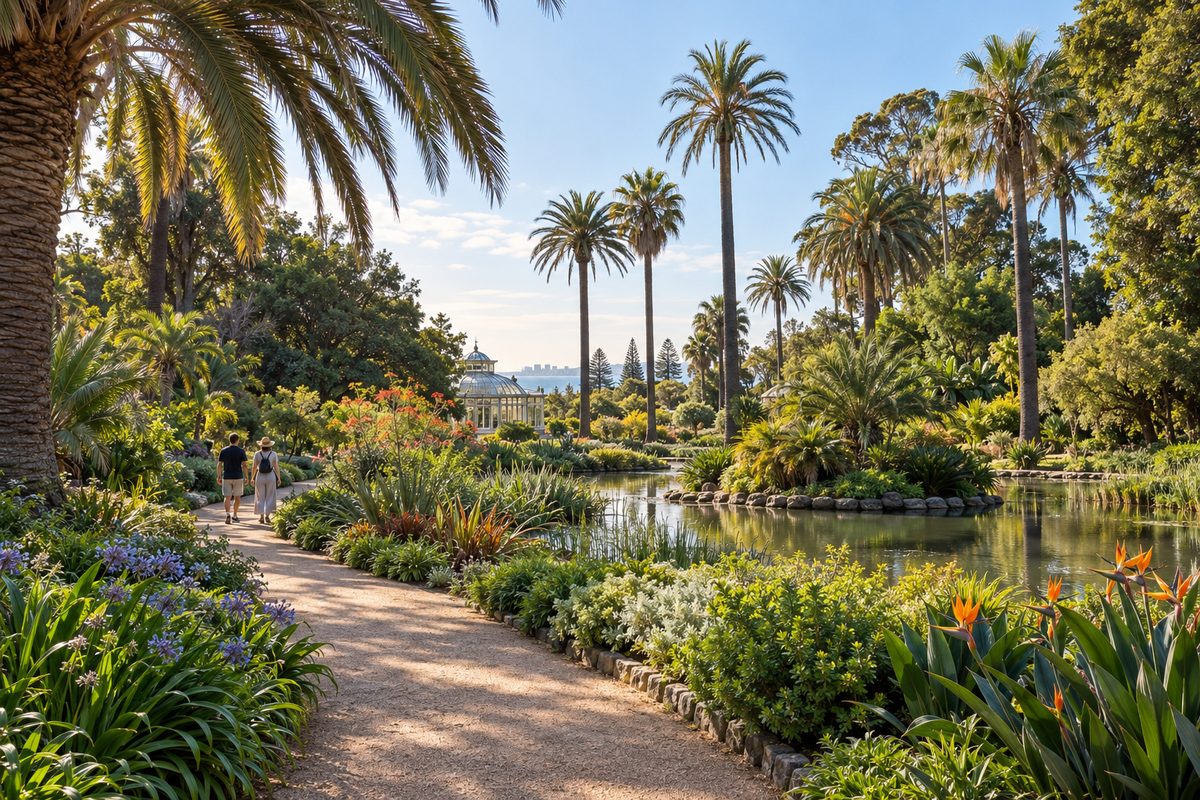
St Kilda Botanical Gardens is a free, quiet heritage garden a short walk inland from the beach, and it is at its best when you treat it as a slow walk, not a quick stop. Most visitors see it as a green patch between the foreshore and the back streets. That undersells it. The gardens are laid out for walking loops, sitting, and looking at plants up close. If you arrive expecting a big open park for ball games, you will leave confused. If you arrive ready to wander for an hour, you will get far more from it.
This guide from St Kilda Almanac covers what is inside, when to go, how to get there and how to fit it into a wider day in St Kilda, Victoria. For more local guides, start at the St Kilda Almanac home page.
What kind of garden is it, really?
It is a Victorian-era botanical garden built for strolling. The site sits on Blessington Street, in the residential blocks east of Acland Street. It covers roughly four hectares. That is small enough to walk end to end in a few minutes, but the paths curve and loop, so a full lap feels longer.
The gardens date back to the mid 1800s. They are listed on the Victorian Heritage Register, which protects the layout and its historic features. That matters for visitors because it explains why the place feels the way it does. The winding paths, the formal beds and the mature trees are part of a planned design. Nothing here is built for speed.
A useful way to picture it is to compare it with the Boston Public Garden in the United States. Both are 19th century public gardens in busy city suburbs. Both are designed around paths, flower beds and a pond, rather than sports fields. People go to both to sit and look, not to run laps. If you have walked through a garden like that, you already know the pace St Kilda Botanical Gardens expects.
The City of Port Phillip manages the gardens. Council is the best source for current opening details, works and any closures.
What should you see first?
Head for the Alister Clark Memorial Rose Garden first. It is the feature most people come for, and it is easy to find near the centre of the gardens.
The Alister Clark Memorial Rose Garden
The rose garden honours Alister Clark, a Victorian rose breeder who bred many roses suited to Australian conditions. The beds are formal, with roses set out in neat rows and edged paths between them. You can walk right up to the plants. Many visitors miss that the roses are a living collection linked to one breeder's work. Reading the plant labels as you go turns a pretty walk into a small history lesson.
Here is a hypothetical example. Say you visit in mid winter and find the rose beds pruned back to bare stems. You might think the garden is in poor shape. It is not. Roses in Melbourne are cut hard in winter so they flower well in spring. The timing of your visit changes this part of the garden more than any other.
The conservatory
The gardens have a glasshouse conservatory with warm-climate plants. It gives you a very different feel from the open lawns outside, with humid air and dense green leaves. The conservatory does not keep the same hours as the outdoor gardens. Check with the City of Port Phillip before you plan around it.
The pond and big trees
The ornamental pond is a good place to pause. Ducks and other water birds use it. Around the gardens you will also find large old trees, including Moreton Bay fig trees. These figs have wide, heavy branches and big root systems that spread across the ground. On a hot day, their shade is the coolest spot in the gardens. Stay on the paths around the roots, since the roots of old figs are easy to damage and easy to trip on.
When is the best time to visit?
Go in late spring if you want the roses. In Melbourne, roses usually hit their main flush around November. There is often a second, smaller flush in autumn, around March and April.
Outside those windows, the gardens are still worth a walk, but your focus should shift:
- Summer: Go early in the morning or late in the afternoon. Shade under the big trees helps, but the open lawns get hot.
- Autumn: Expect the second rose flush and softer light. It is a calm time to visit.
- Winter: The roses are pruned. The conservatory and the evergreen trees carry the visit. Crowds are lighter.
Time of day matters too. Weekday mornings are the quietest. Weekend afternoons bring more families and dog walkers from the surrounding streets. If you want photos of the rose beds without people in them, go early.
How do you get there, and where do you start?
The easiest way is to come by tram or on foot from Acland Street, then walk a few blocks inland to Blessington Street. The walk is short and flat, roughly ten minutes at an easy pace.
Many visitors make one mistake here. They stay on the beachfront and assume the gardens are part of the foreshore. They are not. The gardens sit in the quiet streets behind the shops. Once you leave the beach strip, the noise drops fast.
If you are coming from Fitzroy Street, Melbourne, allow a longer walk, as you will cross through the centre of St Kilda first. Street parking exists in the surrounding blocks, but it is limited and often time-restricted. Read the signs carefully before you leave the car.
The paths are mostly flat and suit prams and wheelchairs well. Some paths are gravel, which is fine for most wheels but slower for small pram wheels.
How does it compare with other green spaces nearby?
Pick the gardens for a quiet walk among plants. Pick somewhere else if you need space to run, kick a ball or exercise hard.
Albert Park and Lake is the better choice for running, cycling and long open walks. The lake loop is several kilometres long and attracts joggers and rowers. It is a sports and fitness space at heart. St Kilda Botanical Gardens is the opposite. It rewards slow walkers and people who like to stop and read plant labels.
The beach and foreshore of Port Phillip suit swimming and sea air. The gardens suit shade and stillness. On a windy day, when the foreshore feels exposed, the gardens are often calmer because buildings and trees break the wind.
Here is a hypothetical case. A visitor wants a morning run, then a slow coffee walk. The run fits Albert Park and Lake. The slow walk fits the Botanical Gardens. Trying to do both in one place leaves you unhappy with one of them.
How can you fit the gardens into a St Kilda day?
Use the gardens as the calm part of the day, between the busy parts. St Kilda's main attractions sit close together, so you can link them on foot.
A simple order that works
- Start at the gardens in the morning, when they are quietest and the light is soft.
- Walk back to Acland Street for lunch or a cake shop stop.
- Spend the afternoon on the foreshore, near Luna Park, Melbourne and the beach.
- Finish at St Kilda Pier near dusk if you want to see the little penguins.
Penguin viewing at the pier uses free ticketed sessions. Book through the official operator and check session times before you go, as they change with the season.
A note for families
The gardens are good for children who enjoy looking at ducks and walking the paths. They are not built as a play space. If your children need to burn energy, plan a separate stop. The St Kilda Adventure Playground is temporarily closed for upgrades at the time of writing, so check its current status with council before you build a day around it.
Who looks after the gardens, and can you get involved?
Council staff maintain the gardens, and a volunteer group supports them. The Friends of St Kilda Botanical Gardens work with council to care for the gardens and promote them. Groups like this often run working bees, guided walks or events. If you live locally and want to help, contact the Friends group directly for current activities.
The Port Phillip EcoCentre is based at the gardens too. It runs environmental programs for the local community. It is a good contact if you are interested in local nature and sustainability projects.
If you want hands-on growing, community gardening is a separate option. The Veg Out community garden in St Kilda gives members plots to grow their own food. It is a different experience from a botanical garden, where you look rather than plant. Knowing the difference saves you turning up at the Botanical Gardens expecting to dig.
What should you know before you go?
A few practical points make the visit smoother:
- Entry is free. There is no ticket for the outdoor gardens.
- Check the conservatory hours. It has its own opening times, separate from the grounds.
- Follow the garden rules. Stay off the garden beds, keep dogs under control as per council signs and take rubbish with you.
- Bring water in summer. The walk from the beach is short, but the lawns get hot.
- Look for works notices. Heritage gardens need upkeep, and sections can close for maintenance.
Picnics on the lawns are common. Keep food off the planted beds and away from the pond, where feeding birds can harm them.
Why do so many visitors walk past it?
Because it is tucked away from the beach strip and has no big sign drawing crowds. Most people in St Kilda stay along the foreshore and the main shopping streets. The gardens sit only a few blocks back, but those blocks are residential. Without a reason to turn inland, visitors never see it.
That is also the gardens' best feature. On a busy summer weekend, when the beach and Acland Street are packed, the Rose garden can feel almost private. The calm is the reason to go.
Your plan for a visit
Go to the St Kilda Botanical Gardens on a weekday morning in November, start at the Alister Clark Memorial Rose Garden, and give yourself a full hour to walk the loops slowly.
Before you leave home:
- Check the City of Port Phillip website for conservatory hours and any works.
- Plan your walk in from Acland Street, a few blocks inland.
- If you want to see the penguins later, book a free session through the official operator.
- Pack water and a hat in warm weather.
Once you are there, slow down. Read the rose labels. Sit under a fig. The gardens give back what you put into them, and that is time.