St Kilda Volunteering and Community Activities
Pick your St Kilda volunteering by how much time you can give: a weekly shift, a one-off event or an outdoor group you join when you can. Then sort out your checks before you apply. Most people start with a cause. They find a group they like, apply, and stall for weeks on paperwork or a shift time that clashes with work. If you match your time pattern first, the right organisation becomes much easier to see.
This St Kilda Almanac guide covers the main types of volunteering and community activities in St Kilda, Victoria. It explains what each one asks of you, which checks you need, and how to choose. For more local guides, visit the St Kilda Almanac home page.
What kinds of help do St Kilda groups actually need?
St Kilda's volunteer work sorts into four main areas. Each one runs on a different rhythm, and that rhythm matters more than the cause when you are deciding where to start.
Meals, homelessness and food security
Sacred Heart Mission is the best-known local name here. It has worked in St Kilda since 1982 and runs a dining room that serves free meals to people who are homeless or doing it tough. Volunteers help with jobs like preparing food, serving and cleaning up. The Mission also runs op shops that need people to sort stock and serve customers.
This work depends on reliability. A kitchen planned around ten volunteers struggles when only six turn up. That is why groups working on food security usually ask for a regular shift, such as one morning a week, rather than the odd visit. If you can promise a fixed slot, you are exactly who they want.
Environmental stewardship on the foreshore
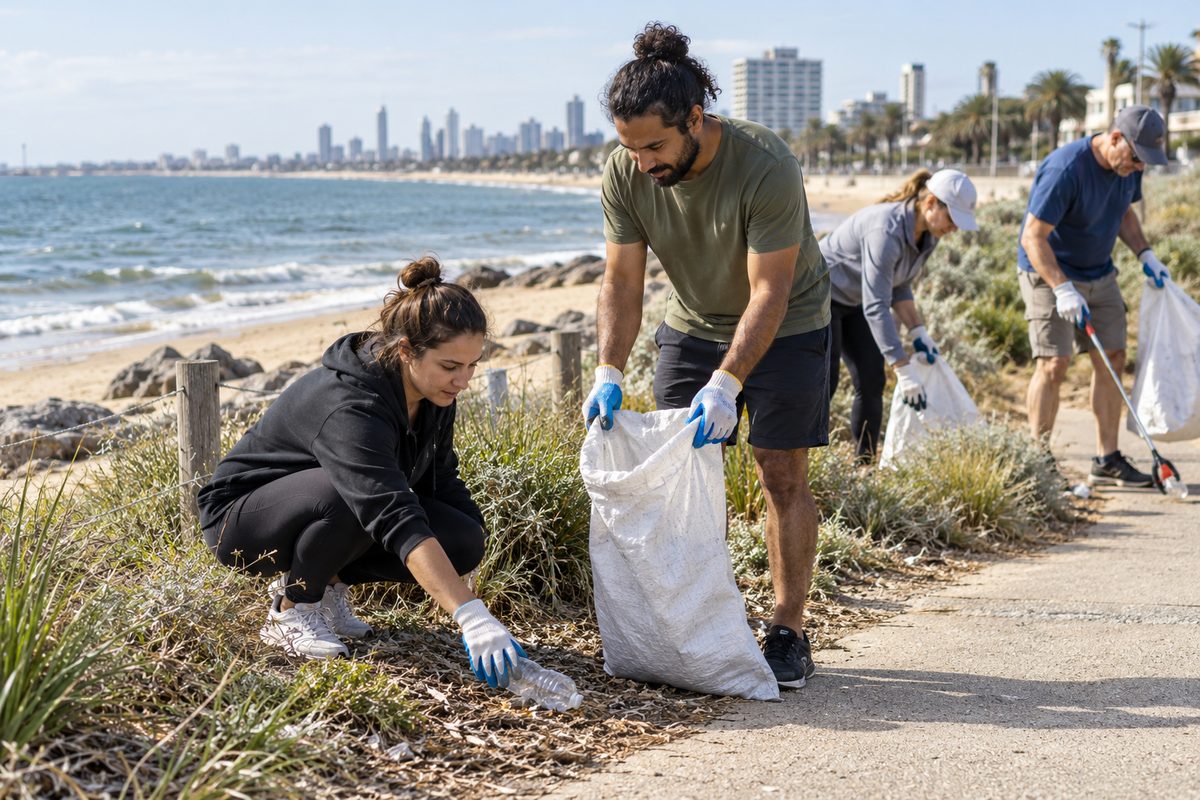
Earthcare St Kilda is a long-running volunteer group focused on the local coast and parks. Its members have been involved in caring for the little penguin colony on the St Kilda breakwater and in public education near St Kilda Pier. The group also runs activities like litter clean-ups and habitat care.
Environmental stewardship work tends to be more flexible than kitchen work. Many activities are outdoors, set on weekends, and open to people who come along when they can. The trade-off is weather and physical effort. You may be bending, carrying bags or standing in wind off Port Phillip for a couple of hours.
One note on penguins: viewing at the breakwater now runs through free ticketed sessions. If you want to watch rather than volunteer, book through the official operator and check current times, as these change with the season and any works on the pier.
Babies, children and families
St Kilda Mums is a charity that collects donated baby and child goods, such as prams, cots, car seats and clothes. It checks and cleans them, then passes them to families in need through social workers and other agencies. The idea started in St Kilda and grew well beyond it.
Volunteers mostly sort, check and pack donations. It suits people who like practical, hands-on work and want a clear sense of what they finished at the end of a shift. Check the St Kilda Mums website for current warehouse locations and session times before you plan around it, as these can move.
Events and festivals
The St Kilda Festival, run by the City of Port Phillip each summer, draws large crowds to the foreshore and Fitzroy Street area. It needs volunteers for jobs like giving directions, handing out information and supporting the event team. Smaller council events, including some held at St Kilda Town Hall on Carlisle Street, also call for helpers from time to time.
Event roles suit people who cannot commit every week. You give a big block of time once, then you are done. The catch is that registration often closes weeks before the event, so you need to plan ahead.
How much time does each option really take?
Here is how the main options compare once you count the hidden time, like training and travel.
- Regular kitchen or op shop shifts: usually two to four hours, once a week or fortnight. Expect an induction session before your first shift.
- Outdoor environmental groups: often two to three hours on a weekend. Many let you come when you can after a short safety briefing.
- Donation sorting: set sessions you book into. Some groups let you choose your dates each month.
- Festival and event roles: one longer shift, often four to six hours, plus a briefing beforehand.
Most articles on volunteering skip the lead time. In practice, the gap between "I want to help" and your first real shift is often two to six weeks. That covers the application, a check or two, and induction. If you want to help over a certain holiday or before a certain date, start the process early.
Which checks and paperwork should you sort out first?
Sort your checks before you apply. This is the single biggest time saver, and few people do it.
Working With Children Check
In Victoria, you need a Working With Children Check for most volunteer roles that involve regular contact with children. That includes some family programs, school-linked activities and youth events. The check is free for volunteers. You apply online, then confirm your identity in person, and the result can take a few weeks.
Even if your first role does not need one, having a current check opens more doors later. If a group asks for it and you already have one, you can often start sooner.
Police checks
Many groups that work with vulnerable adults, such as people experiencing homelessness, ask for a national police check. Some organisations arrange and pay for this for you. Others ask you to get your own. Ask which applies when you first make contact.
Insurance
Insurance is the question most new volunteers never ask. A registered charitable organization or the council will usually hold volunteer personal accident insurance and public liability cover for people working in their programs. That cover generally applies only when you are registered with them and doing an approved activity.
Informal groups are different. A neighbourhood clean-up organised over a social media post may have no cover at all. If you get hurt, or damage something, there may be nothing to fall back on. Before joining any activity, ask one plain question: "Am I covered by your insurance while I volunteer?" A well-run group will answer it straight away.
Can you join community activities without a regular role?
Yes. Plenty of St Kilda community life runs on drop-in help and casual participation rather than formal rosters.
Outdoor groups often welcome first-timers at clean-ups and planting days. These usually run along the foreshore or in local parks, some shaded by big old Moreton Bay fig trees. You turn up at the stated meeting point, sign in, get gloves and a briefing, and get to work. Signing in matters. It is often what links you to the group's insurance.
The City of Port Phillip also runs community events, workshops and consultations. Some are held at St Kilda Town Hall, while others take place in libraries and community centres. Going along is a low-effort way to meet local groups and hear which ones need people. Check the council website for current listings, as dates change often.
Festival season brings the biggest one-off opportunities. If the St Kilda Festival is on your radar, watch for the volunteer call-out well before February. Spots for popular roles can fill fast.
What do first-time volunteers often get wrong?
A few common mistakes slow people down or make them quit early.
- Choosing by cause alone. Someone who loves the penguin cause but works weekends may find the matching activities never fit. Start with your free hours, then pick the cause.
- Overcommitting in week one. Signing up for three shifts a week feels generous. It often leads to burnout and dropping out within a month. One steady shift helps a group more than a burst of help that stops.
- Turning up unannounced. Kitchens and warehouses plan their numbers in advance. An extra person who arrives without booking can get in the way, even with good intentions.
- Forgetting to check current status. Programs pause, move or change times. A listing from last year may be out of date, so confirm with the organisation before you go.
How do you choose the right fit for your situation?
These hypothetical examples show how matching time to role works in practice. They are illustrations, not real cases.
Example one: a full-time office worker. Imagine someone free only on Saturday mornings. A weekday kitchen roster will not work. A weekend outdoor group or a booked donation-sorting session fits much better. If they want food security work, they could ask Sacred Heart Mission whether weekend shifts are available.
Example two: a retiree with a free weekday. Someone with a spare Tuesday every week is ideal for a regular meal service or op shop shift. Groups value this kind of steady availability highly, and the retiree gets a routine and a team they see each week.
Example three: a parent with a young child. A parent may want to help but cannot leave a toddler for a fixed shift. Sorting at a group like St Kilda Mums may suit if sessions are flexible, and some outdoor events welcome families. Always check whether children can attend before bringing them along.
Example four: a student with an unpredictable timetable. A student whose weeks change often may do best with one-off roles. Festival shifts and casual clean-ups let them help without promising a slot they might miss.
In each case, the person's hours decide the type of role first. The cause comes second, and there is almost always an option that fits both.
How do you get the most out of volunteering once you start?
Treat the first month as a trial. Most groups expect new people to try a few shifts before settling in. If the role does not suit you, say so early and ask if there is a different job. A person who dislikes serving might enjoy prep work, or someone who struggles with crowds at events might prefer quiet sorting.
Keep a short record of your hours and any training you complete. It helps if you later want a reference, apply for a role that needs experience, or move to another group in Port Phillip. Some organisations will provide a written reference after you have volunteered for a set period.
Finally, give notice if you need to stop. A simple message lets the group plan. It also keeps the door open if your life changes and you want to come back.
Your next step
Write down the exact hours you can give each week or month, then choose one organisation whose activities fit those hours.
- Check your free time honestly and decide between a regular shift, one-off events or drop-in outdoor work.
- Apply for a Working With Children Check now if there is any chance your role will involve children. It is free for volunteers.
- Contact one organisation, such as Sacred Heart Mission, Earthcare St Kilda or St Kilda Mums, and ask about current roles, checks and session times.
- Before your first activity, ask whether you are covered by the group's insurance while you volunteer.
- Check the City of Port Phillip website for festival volunteer call-outs and community events, and register early.