St Kilda Local Markets and Groceries
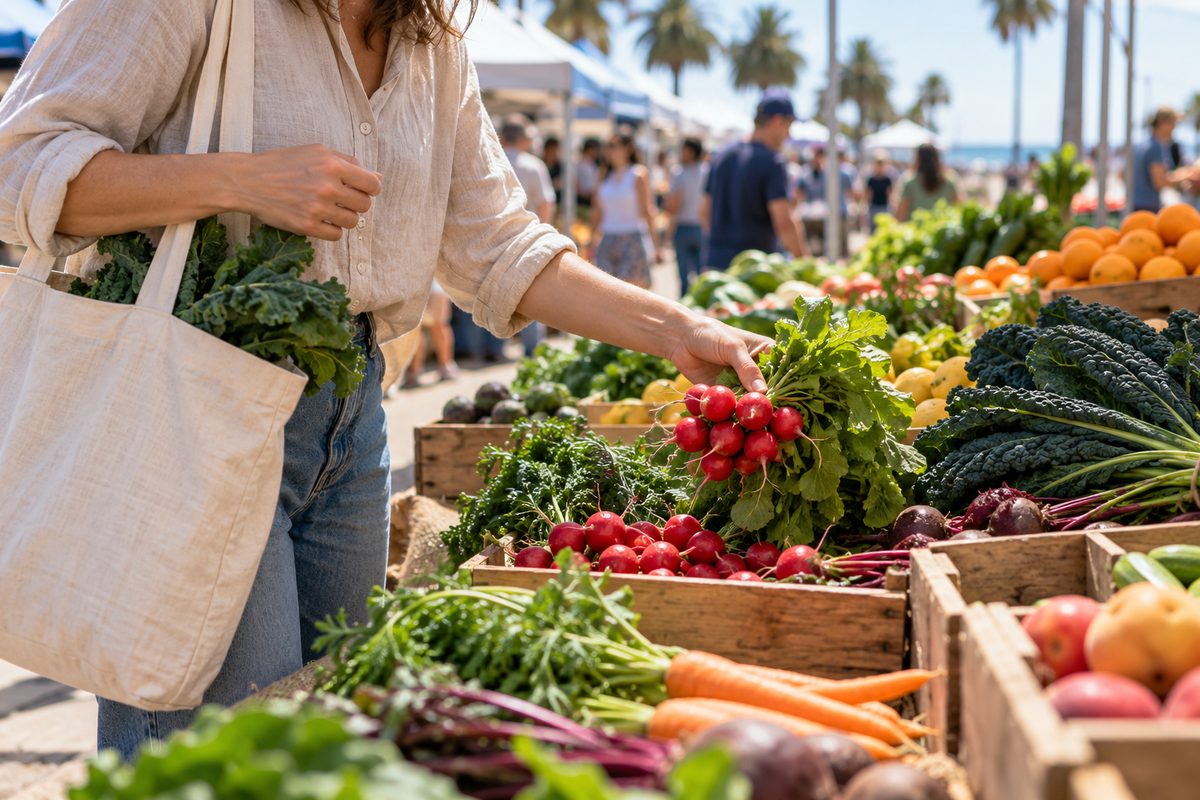
For fresh local food in St Kilda, start at the Saturday St Kilda Farmers' Market and fill the gaps from a supermarket and the specialty shops on Acland Street. That split covers most households. The farmers' market gives you produce picked days ago, straight from the grower. A supermarket covers staples, cleaning products and late-night needs. Acland Street adds bread, cakes and deli items. If you want a bigger weekday market, South Melbourne Market is a short trip away.
One thing trips up a lot of newcomers. The famous Sunday market on the foreshore is not a food market. More on that below.
Where do St Kilda locals actually buy fresh food?
Most people in St Kilda, Victoria, mix three types of shop. Each one does a different job.
- The farmers' market for seasonal fruit, vegetables, meat, eggs and bread sold by the people who produce them.
- Supermarkets for packaged goods, household items and anything you need after the market has packed up.
- Strip shops and specialty grocers for bakery goods, continental deli items and quick top-up shops.
The mistake is trying to make one of these do everything. A farmers' market will not sell you dishwashing tablets. A supermarket rarely tells you which farm your carrots came from. Use each for what it does best and your weekly shop gets cheaper and fresher at the same time.
For a wider look at what the suburb offers, the St Kilda Almanac home page links our other local guides.
Why isn't the St Kilda Esplanade Market a good place for groceries?
The St Kilda Esplanade Market is an arts and crafts market. It runs on Sundays along the Upper Esplanade and has done so since the 1970s. Stallholders sell handmade jewellery, art, ceramics, clothing and gifts. You might find a snack or a jar of something, but it is not set up for a weekly food shop.
Here is a hypothetical example of how this goes wrong. Someone moves to St Kilda, searches for the local market, sees the Sunday Esplanade listing and plans their whole week of meals around it. They arrive with shopping bags and find pottery and prints. The fix is simple. Shop for food on Saturday at the farmers' market, then visit the Esplanade on Sunday for a browse.
Our separate St Kilda Esplanade Market guide covers how to plan a Sunday there. This article stays on food.
When is South Melbourne Market the better choice?
Go to South Melbourne Market when you need a big range, want to shop on a weekday, or missed Saturday morning in St Kilda. It sits in South Melbourne, a short drive, tram trip or bike ride from St Kilda. It trades on several days each week, typically Wednesday, Friday and both weekend days. Check the market's website for current hours.
South Melbourne Market is a permanent indoor and outdoor market with fixed traders. You get greengrocers, butchers, fishmongers, delis, bakers and general stalls under one roof. It suits a large shop, like stocking up before hosting a dinner.
How does it compare with the farmers' market?
The two do different jobs.
- Range: South Melbourne Market wins. It has far more traders and sells imported and out-of-season produce too.
- Direct from the grower: The farmers' market wins. Most South Melbourne traders are retailers, not farmers, though some stalls do sell their own produce.
- Days open: South Melbourne Market wins. The St Kilda Farmers' Market is a once-a-week event.
- Distance: The farmers' market wins if you live in St Kilda.
A sensible pattern is to buy your seasonal produce and eggs at the farmers' market on Saturday, then use South Melbourne Market for fish, specialty items and any midweek top-up.
Which supermarkets cover the basics?
Supermarkets handle the boring but necessary part of your shop. Coles Group runs Coles supermarkets in and around St Kilda, and Woolworths has stores nearby as well. Independent IGA Supermarkets stores also trade across Port Phillip and the surrounding suburbs. Use each chain's online store locator to confirm the closest branch and its current trading hours, since store openings and closures change.
Supermarkets earn their place with long opening hours, online delivery and click-and-collect. For people who work late or do not have a car, that matters a lot.
What should you buy at a supermarket instead of a market?
Buy shelf-stable and household items at the supermarket. Think pasta, rice, tinned goods, cleaning products, toiletries and long-life milk. These do not improve with freshness, and the supermarket's buying power keeps prices down.
Save the market for things where freshness changes the result. Leafy greens, stone fruit, tomatoes, bread and eggs all show a clear difference when they spend less time in storage and transport.
What does Acland Street add to your food shopping?
Acland Street adds the treats and specialty items that make St Kilda food shopping feel local. The street is famous for its European-style cake shops, which have trade on the strip for decades. You will also find cafes, bakeries and small grocers.
Treat Acland Street as your specialty stop rather than your main shop. Grab a loaf, a cake for the weekend or a deli item you cannot find at the supermarket. Nearby streets such as Fitzroy Street and Carlisle Street in neighbouring Balaclava add more small grocers, delis and bakeries.
Are free-range eggs from the market really different?
Often, yes. In Australia, eggs labelled free range must meet a national information standard. It allows a stocking density of up to 10,000 hens per hectare, and the hens must have meaningful and regular access to the outdoors. The carton must show the stocking density.
That 10,000 figure is a ceiling, not a target. Many small farms run far fewer birds. At a farmers' market, you can ask the farmer directly how many hens they keep per hectare and how the birds spend their day. At a supermarket, you read the carton and trust the label.
If hen welfare matters to you, the practical move is simple. Check the stocking density on any carton you buy, and ask the stallholder at the market. Lower numbers mean more space per hen.
Do food miles matter when you shop locally?
Food miles measure how far food travels from farm to plate. Shorter distances usually mean fresher food, because produce spends less time on trucks and in cool rooms. That is the clearest benefit you can taste.
The climate picture is less simple, and many articles get this wrong. Transport is often a smaller part of food's total emissions than how the food is grown. A tomato grown in a heated glasshouse nearby can have a bigger footprint than one grown outdoors further away. So food miles are a useful guide for freshness, and a rough guide for emissions.
The best way to use the idea is to combine it with the seasons. Buy local produce that is in season. That gets you short travel distances and food grown without heavy energy inputs.
Can you get local produce delivered instead?
Yes. Community-supported agriculture, often called CSA, lets you pay a farm in advance for a regular share of its harvest. You usually receive a weekly or fortnightly box of whatever is ready to pick. Several Victorian farms and veg box services deliver to inner Melbourne suburbs, including St Kilda.
Community-supported agriculture suits people who cannot make Saturday mornings work. It also suits cooks who like a surprise and are happy to plan meals around what arrives. The trade-off is less choice. You might get three weeks of zucchini in a row in late summer.
Here is a hypothetical case. A household that works weekend shifts misses the farmers' market most weeks. Signing up for a fortnightly CSA box covers their fresh produce, and a supermarket click-and-collect order covers everything else. They keep local food in their diet without changing their roster.
How do you build a weekly shop that works in St Kilda?
Plan around the farmers' market, then fill in the rest. A simple routine looks like this.
- Saturday morning: Visit the St Kilda Farmers' Market at St Kilda Primary School. Buy produce, eggs, meat and bread for the week. Arrive early for the best range.
- Weekend or midweek: Do one supermarket shop for staples and household items, in store or online.
- As needed: Use Acland Street or nearby strips for bread, cakes and deli items.
- Bigger shops: Head to South Melbourne Market when you need fish, a wide range or a weekday option.
Bring your own bags and a cooler bag if you are buying meat or dairy. Many market stalls take cards now, but carrying some cash helps if a terminal drops out.
What about council information and local rules?
The City of Port Phillip is the local council for St Kilda. Its website lists local events, parking rules and waste services, which helps when planning a market trip. Parking near the farmers' market fills up fast on Saturdays, so walking, cycling or catching a tram is often easier. Check council parking signs before you leave your car.
Your next step
Make this Saturday your first farmers' market shop. Before you go, confirm the current hours on the St Kilda Farmers' Market's own website. Write a short list of fresh items only, and leave staples for the supermarket.
- Check market hours and dates before you leave.
- Buy seasonal produce and free-range eggs at the farmers' market, and ask growers about how they farm.
- Use a supermarket for packaged and household goods.
- Try South Melbourne Market when you need range or a weekday shop.
- Look into a community-supported agriculture box if Saturday mornings do not suit you.
Do this for one month and you will know exactly which shop suits which job. For more local guides, visit the St Kilda Almanac.