St Kilda Jewish Museum of Australia Visitor Guide
The Jewish Museum of Australia sits at 26 Alma Road in St Kilda, and the best visit starts by checking its opening days against the Hebrew calendar before you leave home. The museum closes on major Jewish holidays, and those dates move every year on a normal calendar. Plenty of visitors turn up to a locked door because they planned around school holidays or weekends instead. Once the date is right, the rest is simple. Allow about two hours, come by tram, and save time for the streets around it.
This guide from St Kilda Almanac covers what you will see, how to time your visit and how to link it with the rest of Jewish Melbourne. Opening hours, ticket prices and exhibitions change, so confirm the details on the museum's official website before you go. For more local guides, start at the St Kilda Almanac home page.
What is the museum actually about?
The museum tells the story of Jewish life in Australia, and it does it through objects people used, kept and passed down. That focus is what sets it apart. It is a museum of living culture first.
It opened in 1977 and moved to its Alma Road building in St Kilda, Victoria, in the 1990s. The location makes sense. It sits across the road from the St Kilda Hebrew Congregation synagogue, in the part of Melbourne where Jewish families have lived for generations.
The collection covers a few big areas:
- Australian Jewish history. Letters, photos, documents and family items that trace the History of the Jews in Australia, from Jewish convicts on the First Fleet in 1788 to the migrants who arrived after World War II.
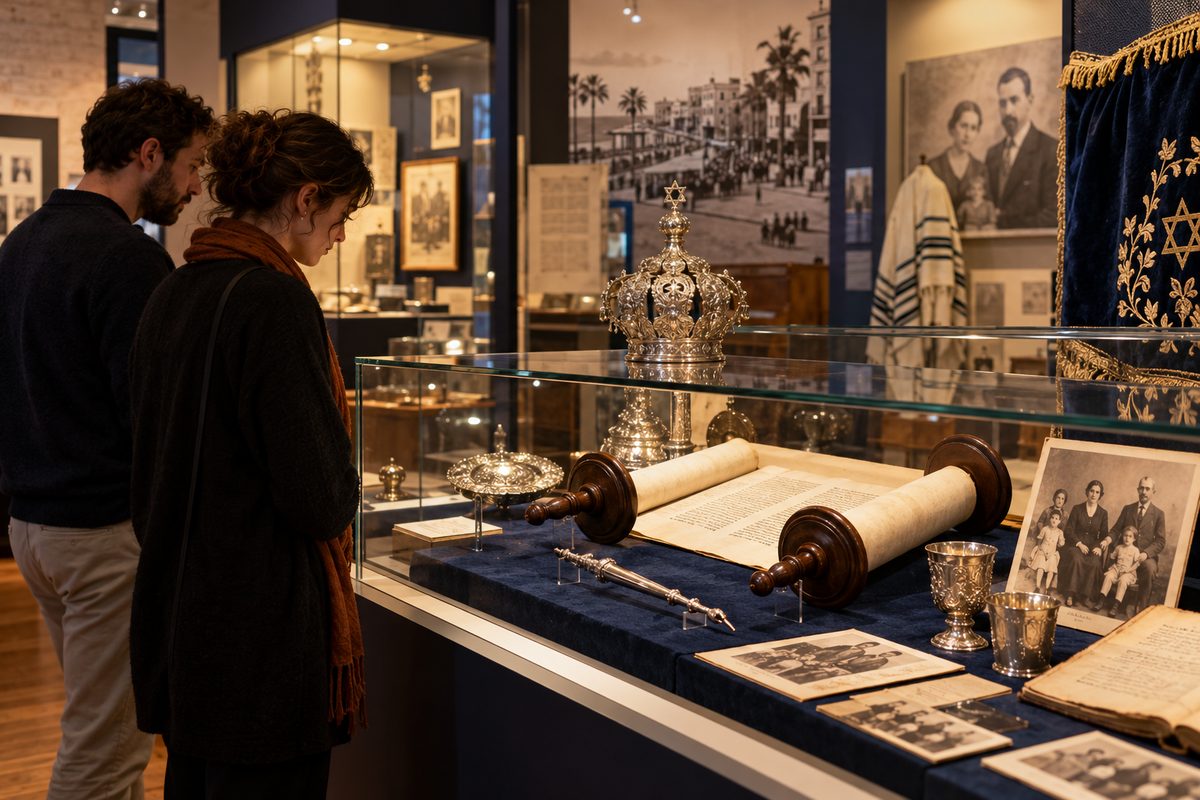
- Jewish ceremonial art. Objects made for prayer, festivals and family rituals, such as candlesticks, spice boxes, wedding items and textiles. This area is often called Judaica.
- Religious texts and the Torah scroll. A Torah scroll is handwritten in Hebrew by a trained scribe on parchment. Seeing one up close explains why communities treat these scrolls with such care.
- Family and community stories. Exhibitions that look at Jewish identity in Australia and how people hold on to tradition while building new lives.
The museum also runs changing exhibitions. Some draw on art and design, and some explore modern questions about belonging. Check what is on before you go, because a temporary show can change how long you want to stay.
Why does the Hebrew calendar matter for your visit?
The Hebrew calendar decides when the museum is closed, so it decides when you can visit. This is the point most visitor guides skip.
The Hebrew calendar follows the moon and is adjusted to keep pace with the seasons. That means Jewish festivals land on different dates each year. Rosh Hashanah, Yom Kippur, Sukkot and Passover can fall weeks apart from one year to the next. Each holiday also begins at sunset the evening before, which can affect late opening times.
The museum has traditionally been closed on Saturdays, which is the Jewish Sabbath, and on Jewish holidays. It has usually been closed on Mondays too. That leaves a narrower window than many people expect.
Here is a hypothetical example. A family visiting Melbourne in late September picks a Wednesday because it is quiet. That Wednesday turns out to be Yom Kippur, the holiest day of the Jewish year. The museum is shut, and so are many Jewish businesses nearby in Balaclava. One quick check of the museum's website would have saved the trip.
The calendar is also a theme inside the museum. Exhibits on the Jewish year explain each festival, what families eat and do, and which objects come out. If you know which festival is coming up, you will spot the matching items on display and the visit makes more sense.
How do you get to Alma Road?
Take public transport if you can. Alma Road is a quiet street, and the museum is a short walk from tram routes in the area.
- By tram. Several routes run along St Kilda Road and through St Kilda and Balaclava. Use the Public Transport Victoria journey planner to find the closest stop from where you are staying.
- By train. Balaclava station on the Sandringham line is the nearest train option. Expect a longer walk from there, or connect to a tram.
- By car. Street parking in St Kilda is limited and often time-restricted. Read every sign, because local parking rules are enforced.
- On foot or by bike. If you are already near Acland Street or the St Kilda foreshore, walking to Alma Road is easy.
Check the museum's website for current access details, including step-free entry and any facilities for visitors with mobility needs.
How long should you plan to stay?
Plan for about two hours. That is enough to see the main galleries properly without rushing the objects that reward a slow look.
A quick lap of the building takes less than an hour, but that misses the point. Much of the value sits in the labels and the stories behind each item. A plain silver cup becomes far more interesting once you read that a family carried it across the world and used it every Friday night for decades.
Add more time if a temporary exhibition is on, if you join a tour or if you are visiting with children who want to try hands-on activities. Guided tours and school programs have been part of the museum's offer for years. Booking ahead is wise for groups.
Is it a good visit for children?
Yes. The museum has long run programs for school groups and families, and children respond well to the objects because they are tied to food, festivals and family life.
Kids who have never seen Hebrew writing often find it fascinating. The Hebrew language reads from right to left and uses its own alphabet. Ask them to spot Hebrew letters on objects as they move through the galleries. It turns a quiet museum into a small treasure hunt.
Here is a hypothetical example of how to make it work. A parent with two primary school children starts with the festival objects, because the kids can link them to holidays they already know from friends at school. They spend twenty minutes on the Torah scroll and the story of how a scribe writes it by hand. They finish with family photos from early Melbourne. The visit lasts ninety minutes and nobody gets bored, because each stop answers a question the children asked.
Check the museum's website for family days and school holiday programs, since these change through the year.
How does it connect with the Melbourne Holocaust Museum?
The two museums tell different parts of one story, and visiting both gives you the full picture. The Jewish Museum of Australia covers Jewish life, culture and history broadly. The Melbourne Holocaust Museum focuses on the Holocaust and its lasting impact.
The Melbourne Holocaust Museum is in Elsternwick, a short drive or tram trip south-east of St Kilda. It reopened under its current name after a major rebuild. For decades, Holocaust survivors volunteered there as guides and speakers, sharing their own stories with students and visitors. Melbourne took in a large number of survivors after World War II, and many settled in St Kilda, Caulfield, Victoria, and nearby suburbs.
That shared history is why the order of your visits matters. A useful approach is to see the Jewish Museum of Australia first. It shows the culture, faith and everyday life that existed before, during and after the war. Seeing that first makes the Holocaust museum's account of loss hit with greater force, because you understand what was being destroyed.
Plan the two visits on separate days if you can. Both are emotionally heavy in parts, and both deserve your full attention. Check each museum's hours and booking rules separately, as they run independently.
What should you pair with a visit nearby?
Walk the streets after your visit. The museum makes more sense when you see the community it describes still going about daily life around you.
Acland Street
Acland Street is famous for its old-style cake shops, several of which trace their roots to Central and Eastern European migrants, many of them Jewish. The windows full of cheesecake, strudel and poppy seed cakes are a living link to the migrant stories inside the museum. It is a short walk from Alma Road.
Balaclava and Carlisle Street
Carlisle Street in Balaclava, Victoria, has kosher bakeries, butchers, cafes and Judaica shops. On a weekday morning it is busy with local families. Remember that many of these businesses close from Friday afternoon through Saturday for the Sabbath, and on Jewish holidays.
Elwood and Caulfield
Elwood, Victoria, and Caulfield, Victoria, are home to synagogues, Jewish schools and community centres. You do not need to visit them, but knowing they are there explains why this part of Melbourne has such a strong Jewish presence. Together with St Kilda and Balaclava, they form the heart of Melbourne's Jewish community.
St Kilda Road
St Kilda Road links the area to the city. The Melbourne Hebrew Congregation, one of the oldest Jewish congregations in Melbourne, sits near St Kilda Road in South Yarra. Its grand synagogue is a reminder that Jewish history in this city goes back to the early 1840s.
If you want more ideas for a full day in the suburb, the St Kilda Almanac has guides to the pier, the foreshore and local venues.
What do first-time visitors get wrong?
The biggest mistake is assuming the museum keeps normal weekend hours. Saturday is the Sabbath, and the museum has traditionally been closed. Sunday has usually been the best weekend day to go.
Other common slip-ups:
- Ignoring holiday closures. Jewish festivals shift each year, so a date that worked last year might not work now.
- Expecting a Holocaust museum. The Holocaust is part of the story here, but the focus is Jewish life in Australia. Go to Elsternwick for the dedicated Holocaust museum.
- Rushing the labels. The objects look simple until you read the story behind them. Slow down.
- Skipping the neighbourhood. The streets around the museum are part of the experience. Leave time to walk.
- Not checking for changes. Museums update exhibitions and sometimes close galleries for works. Check the official website close to your visit date.
A note on respect: the museum sits opposite an active synagogue. Keep noise down near the synagogue entrance, and ask before taking photos of people at prayer or arriving for services.
Your visit plan
Check the museum's official website for this week's opening days, then compare them with the Hebrew calendar before you lock in a date.
- Pick your day. Choose a weekday or Sunday that is clear of Jewish holidays.
- Plan your route. Use the Public Transport Victoria journey planner to find the nearest tram stop to Alma Road.
- Allow two hours. Add more if a temporary exhibition or tour interests you.
- Walk to Acland Street afterwards. Visit the cake shops and see the migrant story continue outside the museum.
- Book the Melbourne Holocaust Museum for another day. Visit it after this museum so the two stories build on each other.
Get the date right first. Everything else about this visit falls into place once you do.